
Passionate about holisitic health, living your dream and bringing the peace
Showing posts with label diabetes. Show all posts
Showing posts with label diabetes. Show all posts
Thursday, 12 July 2012


Thursday, 9 February 2012
My Second Favourite Form of Exercise
 My Second Favourite Form of Exercise
I’m not a gym person. I’ve been twice, when I was about 16, with a friend. I was all enthusiastic about it until she couldn’t go with me the third time so I didn’t go either, and I never went back. The thought of going to a gym to exercise just does not get me excited at all, and I think this is a common stumbling block for a lot of people. You know you need to exercise more, but finding the time and inclination is difficult, if not near impossible.
Let me tell you about a one (or two) of my favourite forms of exercise and why I enjoy them, in the hopes that it will inspire you to find something you love to do too. My second favourite form of exercise is dancing, of which I do two types. The first is Ceroc, a type of modern jive that gets your heart pumping and your feet thumping, yet forces your mind to relax. It’s sociable, energetic and easy (ish) to learn. For the first couple of years of my Ceroc career (once I’d learnt the basic steps which only takes a few classes), it was the only two hours in a week when I wasn’t in charge. It’s a male led dance so as a female, all you have to do is follow the man’s lead and giggle when you get it wrong (which happens frequently, even after four or more years). The more I concentrate on what I’m doing, the more my body tenses and the more mistakes I make. So I just have to relax and go with the flow, feel the rhythm and keep spinning.
The second type of dancing I do is pole dancing, which could be construed as controversial, as I pride myself on my professionalism as (amongst other things) an aromatherapy massage practitioner, and the in the wrong context, the two vocations together makes for an interesting career choice! However, the pole dancing lessons take place in a freezing cold studio on an industrial park and couldn’t be any further from a sleazy strip joint if you tried, and I have no intention of trying. Being just a beginner in this pole dancing lark, and being rather nervous before my first class, I have found it very enjoyable, again sociable (though thankfully no men this time!) and after just three weeks my arms are already more toned and my strength has improved noticeably. It works pretty much all areas of your body, as I found when I couldn’t change into second gear for about three days after the first class, and I can still feel it in my lower abdominals now. It’s also a very skilled form of dance (verging on acrobatics), and I have much respect for the others in the class who can hang upside down holding on with just their thighs, whilst somehow appearing graceful. I hope that one day soon I will have the strength, flexibility and fearlessness to enable me to do the same too.
Another form of exercise I enjoy is walking. I love having a good stomp up a hill to get the blood flowing and the heart beating, then turning round to pause and enjoy the view before carrying on. I also love the fresh air, seeing the seasons change and exploring my locality on foot.
There’s bound to be an activity out there that you love to do, it’s a case of experimenting and finding it. It could be golf, martial arts, abseiling or trampolining. There’s nothing that beats the feeling of being in the moment, with the wind in your hair and the world spinning around you. You don’t need to make an effort as it becomes a joy to do, you don’t need to make time as it becomes part of your routine and you don’t need to worry about exercising more as you can’t get enough of it.
Thursday, 3 February 2011
Weight Loss Myth No 2
Weight loss myth number 2
If you eat a diet low in fat, you’ll lose fat and won’t be overweight. It’s an assumption we all make, and with the supermarket shelves piled high with ‘Low fat’, ‘light’ and ‘0%’, it’s easy to get drawn into the hype.
So what fuelled this paradigm? It seems to make perfect sense until you realise that obesity and heart disease are on the increase, and this low fat diet we’ve been following for decades appears to be having the opposite effect.
It was in the seventies when the research was carried out claiming a high fat diet leads to coronary heart disease, hence the birth of the low-fat craze in the early eighties that has been with us ever since. But this research was flawed, not analysed properly, and has led us all astray.
The research was based on LDL (low density lipoproteins, aka ‘bad cholesterol’) levels in the body. Here’s what it concludes:
In the mid seventies they discovered that dietary fat (A) raises LDL (B):
A → B
In the late seventies it was found that LDL (B) levels correlated with cardiovascular disease (C):
B → C
So therefore, dietary fat leads to heart disease:
A → C
Right?
Wrong. Here’s why:
There are two types of LDL that can currently only be tested as one:
- Pattern A, large, buoyant LDL that floats through the bloodstream and doesn’t stick to your arteries (neutral)
- Pattern B, small, dense LDL, which starts the plaque formation that causes heart disease (bad).
So what causes these different types of LDL to rise? Pattern A is affected dietary fat, pattern B is affected by carbohydrates.
And then what happened? The American government started a campaign to reduce the amount of fat in the diet from 40% to 30%, and in true British style, we followed. And achieved it. But by reducing the fat in food, you also reduce the flavour, and it becomes unpalatable. So to make it taste nice (and therefore sellable), food manufacturers added sugar, and sweeteners. And what’s sugar? A carbohydrate. And what do carbohydrates do? Increase the bad form of LDL. So we were doubly duped!
Click here for my previous article on sugar. Sweeteners are just as, if not more evil than sugar – don’t get me started on them!
Now I’m not proposing you give up all carbohydrates and eat bacon for the rest of your days, it’s all about finding out what’s right for your body. Listen to it, it will tell you. Feel bloated after bread? Don’t eat it. Get heartburn after fatty food? Stay off it. These are just a couple of examples of your body telling you it doesn’t like what you’re giving it. And then of course there are my general guidelines such as avoiding sugar, exercising, eating whole, unprocessed foods, lots of fruit and veg and being happy. Simples.
Monday, 15 March 2010
What could possibly be worse for your health than smoking?
What could possibly be worse for your health than smoking?
Some experts suggest there is an everyday substance even worse for your health than tobacco. A substance that is far reaching, it can be hidden or the m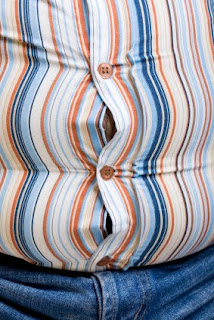 ain ingredient in many foods. It is as pure and white as the driven snow, and sweeter than your sweetheart.
The substance is sugar. It comes in many different disguises and always tastes good. It’s not just found in the obviously sweet foods such as pop, cakes, biscuits and chocolate, but also in tomato ketchup, salad dressing, cereal, peanut butter, bread, pickle, baked beans, yoghurts and many, many, more everyday foods.
So how can you tell what to look for and what makes sugar so bad?
Check the ingredients of the foods you buy, you’ll be surprised at how many contain sugar and/or it’s disguised derivatives:Glucose/Dextrose (refined sugar)
Sugar is linked to all sorts of nasties, including -Immune system suppression
Glucose, lactose, maltose and fructose can all be found in nature. That doesn’t mean they’re ‘natural’ when refined and added to foods. They’re all found in whole foods, and when eaten as a whole food (a fresh, crisp apple), all the necessary fibre and enzymes are included for correct metabolism and absorption of all the goodness of that said food. That’s why whole foods don’t come with a list of ingredients.
Although no type of sugar is good for you, refined fructose has been implicated in some pretty serious crimes - obesity, type 2 diabetes, cardio-vascular disease, high blood pressure and lipid (cholesterol) problems. These diseases are collectively known as metabolic syndrome, and are the cause of the obesity epidemic we’re now facing.
Fructose is found in ice cream, fromage frais desserts, soya yogurts, cakes and ‘light’ foods. This refined sugar has the same long term effects on your body as alcoholism (alcohol is fermented sugar), only you don’t notice so much as you don’t get drunk. So next time you see someone with a beer belly (not just on men!), it means they’re likely to have a sweet tooth instead of/as well as high alcohol consumption.
What about brown sugar? Is that better for you than white sugar?
Sorry, but it’s bad news. Brown sugar has either been washed less than white sugar, or has had molasses added back into the white sugar to coat the crystals and give it a bit of a different flavour. So it’s still had all its nutrients stripped during the refining process and is no better for you than white sugar.
What about artificial sweeteners?
The news is even worse for artificial sweeteners. Aspartame, found in Canderel, diet colas, sugar-free fruit squashes etc, has had more reactions reported to the US Food & Drug Administration than every other food additive combined. Reactions included migraines, headaches, memory loss, hallucination, fatigue, nausea and vomiting to name just a few of the milder symptoms. Sucralose (E-number E955), found in Splenda, is linked with enlarged liver and kidneys, reduced growth rate, aborted pregnancy and diarrhoea.
So what can I use?
My personal approach is to avoid sugar all together. I’m not always successful at it, but once you cut it out, you realise how sickly doughnuts and chocolate are, and how sweet fruit and vegetables are. Suddenly I have a whole new appreciation for roast parsnips, sweet potato wedges and slow-cooked onions. Strawberries that have been warmed by the sun become like nectar, and pineapple is my version of a bag of penny chews.
If ever the mood takes me to do some baking, I’ll use xylitol to replace the sugar in the recipe. This is found in shops as Xylobrit, Xylosweet or Perfect Sweet. It’s not perfect, it has a laxative effect in high doses, but it has also been found to be good for your teeth (its used in sugar-free gum) amongst other benefits.
So now we’ve discovered the true source of the obesity epidemic and it’s nothing to do with fat. It’s all about the sugar. Phew, after all this technical stuff I need a break, and in the next article, we’ll discover the power of taking 15 minutes out everyday.
Wishing you peace and good health,
Bess
Some experts suggest there is an everyday substance even worse for your health than tobacco. A substance that is far reaching, it can be hidden or the m
 ain ingredient in many foods. It is as pure and white as the driven snow, and sweeter than your sweetheart.
The substance is sugar. It comes in many different disguises and always tastes good. It’s not just found in the obviously sweet foods such as pop, cakes, biscuits and chocolate, but also in tomato ketchup, salad dressing, cereal, peanut butter, bread, pickle, baked beans, yoghurts and many, many, more everyday foods.
So how can you tell what to look for and what makes sugar so bad?
Check the ingredients of the foods you buy, you’ll be surprised at how many contain sugar and/or it’s disguised derivatives:Glucose/Dextrose (refined sugar)
- Glucose Syrup/Corn Syrup (processed from corn)
- Sucrose (white sugar)
- Invert Syrup/Treacle (found in golden syrup, toffee, black treacle)
- Lactose (milk sugar)
- Maltose (found in germinating seeds such as barley for beer)
- Hydrolysed Starch (just another description for sugar)
- Fructose (fruit sugar)
- Raw, Brown or Demerara Sugar
Sugar is linked to all sorts of nasties, including -Immune system suppression
- Hyperactivity, anxiety and difficulty concentrating
- Premature aging
- Alcoholism
- Weakened eyesight
- Yeast imbalance leading to thrush
- Increased risk of diabetes, heart disease and obesity
Glucose, lactose, maltose and fructose can all be found in nature. That doesn’t mean they’re ‘natural’ when refined and added to foods. They’re all found in whole foods, and when eaten as a whole food (a fresh, crisp apple), all the necessary fibre and enzymes are included for correct metabolism and absorption of all the goodness of that said food. That’s why whole foods don’t come with a list of ingredients.
Although no type of sugar is good for you, refined fructose has been implicated in some pretty serious crimes - obesity, type 2 diabetes, cardio-vascular disease, high blood pressure and lipid (cholesterol) problems. These diseases are collectively known as metabolic syndrome, and are the cause of the obesity epidemic we’re now facing.
Fructose is found in ice cream, fromage frais desserts, soya yogurts, cakes and ‘light’ foods. This refined sugar has the same long term effects on your body as alcoholism (alcohol is fermented sugar), only you don’t notice so much as you don’t get drunk. So next time you see someone with a beer belly (not just on men!), it means they’re likely to have a sweet tooth instead of/as well as high alcohol consumption.
What about brown sugar? Is that better for you than white sugar?
Sorry, but it’s bad news. Brown sugar has either been washed less than white sugar, or has had molasses added back into the white sugar to coat the crystals and give it a bit of a different flavour. So it’s still had all its nutrients stripped during the refining process and is no better for you than white sugar.
What about artificial sweeteners?
The news is even worse for artificial sweeteners. Aspartame, found in Canderel, diet colas, sugar-free fruit squashes etc, has had more reactions reported to the US Food & Drug Administration than every other food additive combined. Reactions included migraines, headaches, memory loss, hallucination, fatigue, nausea and vomiting to name just a few of the milder symptoms. Sucralose (E-number E955), found in Splenda, is linked with enlarged liver and kidneys, reduced growth rate, aborted pregnancy and diarrhoea.
So what can I use?
My personal approach is to avoid sugar all together. I’m not always successful at it, but once you cut it out, you realise how sickly doughnuts and chocolate are, and how sweet fruit and vegetables are. Suddenly I have a whole new appreciation for roast parsnips, sweet potato wedges and slow-cooked onions. Strawberries that have been warmed by the sun become like nectar, and pineapple is my version of a bag of penny chews.
If ever the mood takes me to do some baking, I’ll use xylitol to replace the sugar in the recipe. This is found in shops as Xylobrit, Xylosweet or Perfect Sweet. It’s not perfect, it has a laxative effect in high doses, but it has also been found to be good for your teeth (its used in sugar-free gum) amongst other benefits.
So now we’ve discovered the true source of the obesity epidemic and it’s nothing to do with fat. It’s all about the sugar. Phew, after all this technical stuff I need a break, and in the next article, we’ll discover the power of taking 15 minutes out everyday.
Wishing you peace and good health,
Bess
Subscribe to:
Posts (Atom)